The Only Model That Answers Year Five

17 Oct 2026 · @Hannan Lis
The idea that keeps coming back
In my last piece I argued that the two-state solution cannot answer one question: what happens in year five, when a sovereign Palestinian state holds an election and Hamas wins. A deal strong enough to survive that is not a state. A state real enough to be called one cannot survive it.
There is one model that answers the question. It is older than Oslo, it has been proposed by a king, rejected by everyone, and revived in every decade since. Jordanian-Palestinian confederation.
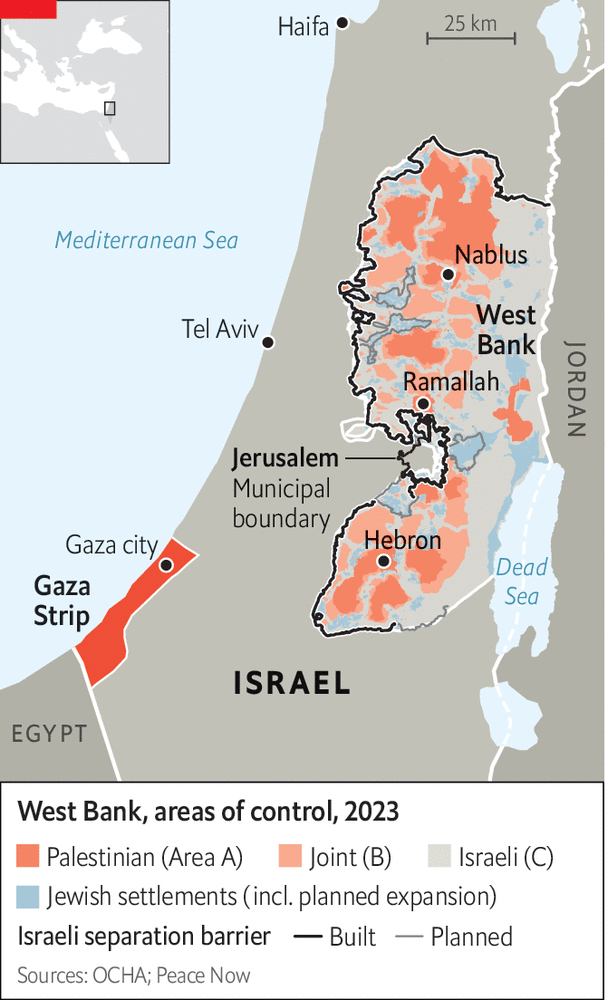
It keeps coming back because the pieces already exist. Jordan ruled the West Bank from 1948 to 1988. Roughly half of Jordan's population is of Palestinian origin. The dinar still circulates in the West Bank. The Hashemite king still holds custodianship of the Jerusalem holy sites. No other proposal starts with that much infrastructure on the ground.
What it would actually look like
A Palestinian entity in the West Bank, and eventually Gaza, with its own flag, parliament and internal administration, joined to the Hashemite Kingdom in a confederation. The Palestinian region runs its schools, courts, police and municipalities. The confederation runs what a small landlocked territory cannot: currency, customs, external security, foreign policy.
The template is King Hussein's 1972 United Arab Kingdom plan. Two regions, Jordanian and Palestinian, each with its own government and legislature. A federal capital in Amman. Jerusalem as the capital of the Palestinian region. One army, one foreign ministry, one head of state. Hussein proposed it, the PLO called it treason, and Israel ignored it. But the architecture has never been improved on.
The modern versions add a third leg. The confederation papers discussed since 2018, in Amman, in Jerusalem think tanks and briefly in Washington, treat it as a Jordan-Palestine-Israel triangle: a shared economic zone, joint infrastructure in water and energy, coordinated security along the Jordan Valley. Not a merger of two states but a framework of three, in which the Palestinian region is the junior partner of one and the economic partner of both.
The key features, in plain terms:
Palestinian self-government in everything domestic, under a Palestinian flag
Jordanian responsibility for external security and the Jordan Valley frontier
Shared currency, customs union and labor market with Jordan, open trade with Israel
Hashemite custodianship of the holy sites, formalized rather than contested
Palestinian seat at the UN as a region of a confederation, not a sovereign state
Israeli enforcement rights on demilitarization written into the founding treaty
Why it answers year five
Security is Jordanian, not Palestinian. That single fact dissolves the trap.
The Jordanian army and intelligence service are among the most competent in the Arab world. They have coordinated with Israel for decades, quietly before 1994 and openly since. They have already crushed an armed Palestinian movement once, in September 1970, when the PLO tried to turn the kingdom into its base. The Hashemites know exactly what a Hamas state on their border means, because they have spent thirty years keeping the Muslim Brotherhood contained inside their own.
Now run the year-five scenario again. Hamas wins a majority in the Palestinian regional parliament. In a sovereign state, that ends the treaty. In a confederation, it is an internal matter for a senior partner that controls the army, the budget, the borders and the courts of last resort. Amman has every incentive to contain it and the means to do so. Israel's treaty partner is still the king, not a new and untested government in Ramallah.
The Jordan Valley stops being a frontier between Israel and an unknown state. It becomes an internal confederal line with an allied monarchy on both sides of it. The question that kills the two-state solution, who enforces when the signer loses, has an answer: the same people who have enforced the longest-standing quiet border Israel has.
This is not a sovereign democratic Palestine. It is something closer to what Israel's actual peace partners are: states that keep a cold peace because their rulers have more to lose from war than from their own Islamists. That model has held for forty years. The other one has never held at all.
Why everyone says no
Amman says no, and means it. The Hashemites survive by balancing an East Bank tribal base against a Palestinian majority. Absorbing three million West Bankers, and Hamas as a legal party inside the kingdom's politics, is an existential risk to the throne. Every time an Israeli politician says "Jordan is Palestine," the palace hears a plan to solve Israel's problem by ending the monarchy. The king will not bet his dynasty on an idea that the Israeli right has spent decades advertising as a way to get rid of the Palestinians.
Ramallah says no, because the flag is all it has. Fatah's entire claim to legitimacy is the promise of an independent state. Confederation reads as surrendering independence before achieving it. The PLO called Hussein's 1972 plan treason, and nothing in Palestinian politics has changed enough to let a leader say yes to its successor and survive.
Jerusalem says no, from both sides. The Israeli right says no because confederation still means withdrawal from most of the West Bank, and because it hands the holy basin to a foreign monarch. The Israeli center says no because it is not the two-state solution, and the center has never been able to think past the two-state solution.
The Gulf will not fund what Amman will not accept. Saudi and Emirati money follows political cover. Without a Jordanian yes there is no cover, and without the money there is no economic package to make the West Bank worth absorbing.
Four vetoes. That is why confederation is always the next idea and never the current one.
What would have to change, and in what order
The four vetoes are not equal. Jordan's is the one that matters, because the other three fall if Amman moves. So the question is what Amman would need.
Guarantees for the throne. The Palestinian region stays a region. No Palestinian vote inside East Bank politics, ever. A constitutional firewall between the two legislatures, enforced by the confederal court and underwritten by Washington. The king keeps the army, the intelligence service and the power to dissolve the Palestinian regional government on security grounds.
Money on a scale that changes the calculation. Not aid. A Gulf-financed, American-guaranteed sovereign fund measured in the tens of billions, tied to the confederation's existence and paid into Jordanian institutions. Jordan has absorbed Palestinians, Iraqis and Syrians for seventy years on a fraction of that. Make absorbing the West Bank the best deal the kingdom has ever been offered.
A refugee settlement that ends Jordan's own exposure. The two million registered refugees in Jordan are the question Amman never wants asked. A confederation settles it: they are citizens of the confederation, the right of return is exercised inside the Palestinian region, and the claim against Israel is closed in the founding treaty.
Then the sequence, which is the opposite of a grand signing:
A Jordanian role in Gaza: reconstruction contracts, a police training mission, eventually a Jordanian-led Arab stabilization force with Israeli enforcement rights preserved.
Jordanian administration of the Jerusalem holy basin, formalized from custodianship into governance.
Economic integration of the West Bank into the kingdom: customs, banking, labor permits, the dinar as sole currency.
A Palestinian regional government elected under confederal rules, with Hamas allowed to run and Amman holding the levers if it wins.
Only then, a political label on what already exists on the ground.
No ceremony on the White House lawn. Facts first, flag last. That is how the Hashemites have done everything that has worked.
The next idea that never becomes the current one
Confederation is not a romance. It does not give Palestinians the independent state they were promised, and it does not give Israelis the clean separation they want. It gives both something they have never had: an arrangement that does not collapse the first time a Palestinian election goes the wrong way.
That is the only test that matters, and it is the one the two-state orthodoxy fails. Every other model on the table, a Gaza trusteeship, staged autonomy, permanent management, is a partial version of what confederation does fully. All of them share one virtue: they do not depend on Palestinian ballots producing Palestinian moderates. Confederation is simply the one that does it with an existing army, an existing treaty partner and an existing currency.
It requires a Jordanian king to bet his dynasty on it. That is a real price, and it is why the idea has been the next idea for fifty years. But the alternative is to keep proposing a state that cannot survive its own voters, and calling that realism.
The two-state solution is the thing everyone can say out loud. Confederation is the thing that might actually work. The gap between those two sentences is the entire problem.
Comments